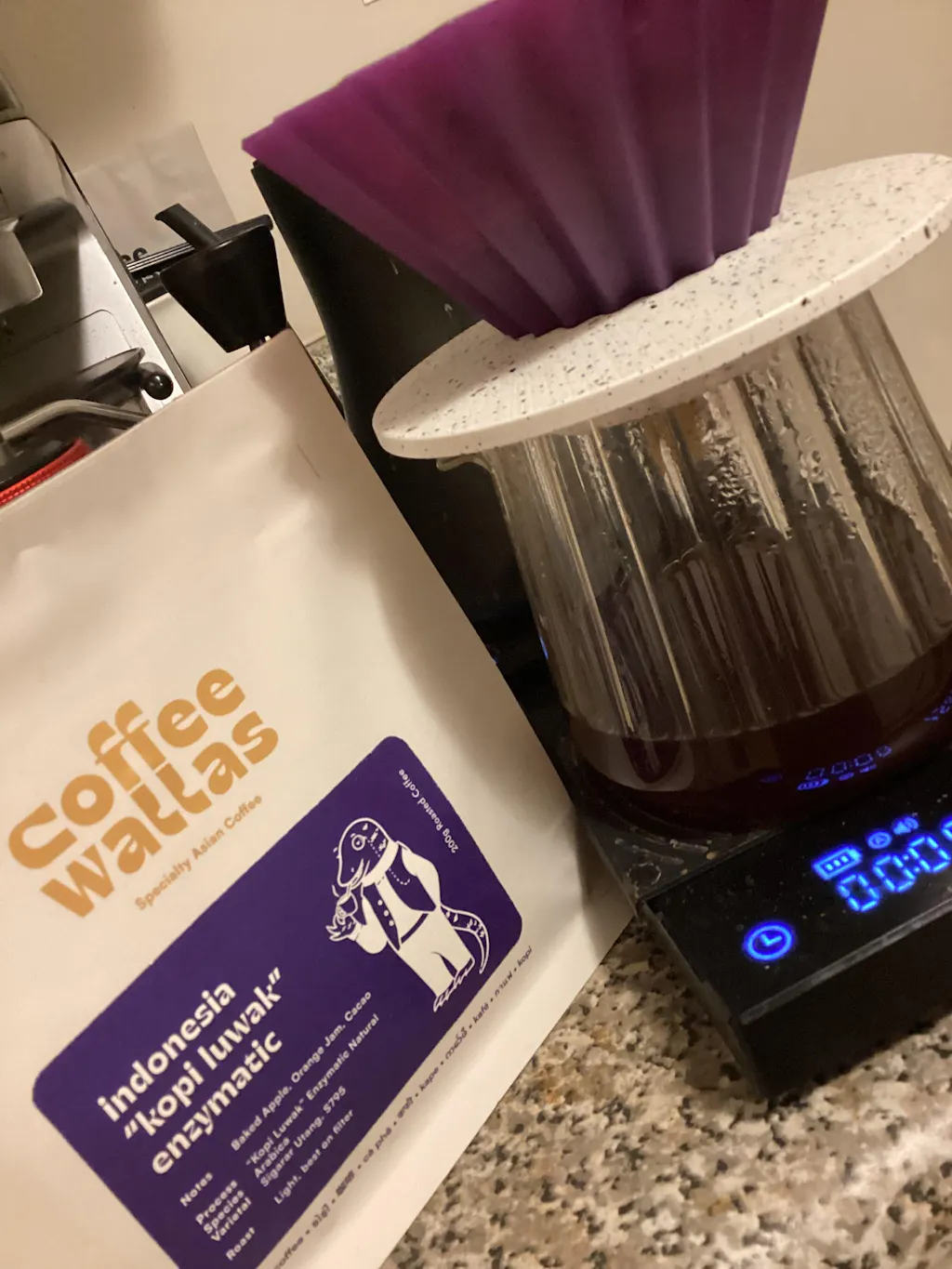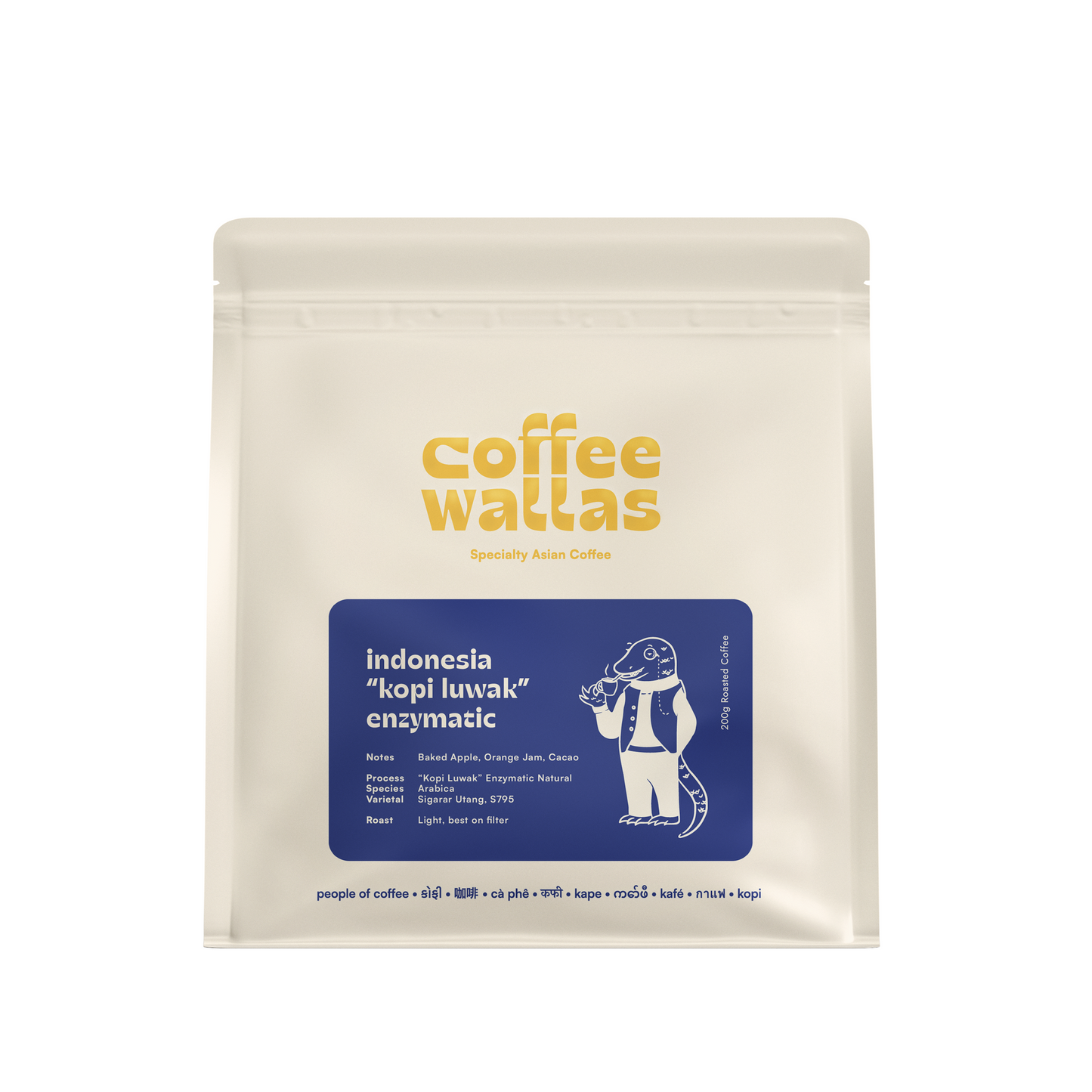


What's exciting about this coffee
Kopi Luwak is one of the most recognizable names in coffee, but its reputation is complicated. The original process involves feeding coffee cherries to civet cats and collecting the beans from their droppings — a method that's raised serious animal welfare concerns as demand led to caged civets being force-fed cherries in terrible conditions.
Rani Mayasari's enzymatic process solves that problem entirely. Working with microbiologists at Indonesia's Institut Pertanian Bogor (IPB), she spent three years developing a way to replicate the enzymatic breakdown that occurs during civet digestion — but in a controlled, hygienic, and completely animal-free environment. The team tested over 390 samples with 12 Q graders to dial in the process. The result is a combination of three microbial strains — yeast and microbes — that Rani rehydrates and introduces during anaerobic fermentation in a temperature-controlled dark room. Longer fermentation times push the cup toward fruit-forward profiles, while shorter durations bring out more floral characteristics.
The research has also drawn attention from UC Davis's coffee science department. After Rani launched the enzymatic luwak at a coffee event in Portland in 2022, UC Davis professors visited IPB to learn more, and there are now plans for ongoing collaboration between the two universities.
Beyond the science, what makes this special is the person behind it. Rani is a Certified Q Processor with over 15 years in Indonesian specialty coffee. She runs Java Halu Coffee, a processing operation and exporter built around a cooperative of over 160 farmers — the majority of whom are women. Java Halu also runs zero-waste initiatives, turning coffee cherry pulp into briquettes, fire starters, and biochar through their Magoffee program. This is specialty coffee with real substance behind it.