Skip to product information
1 of 2

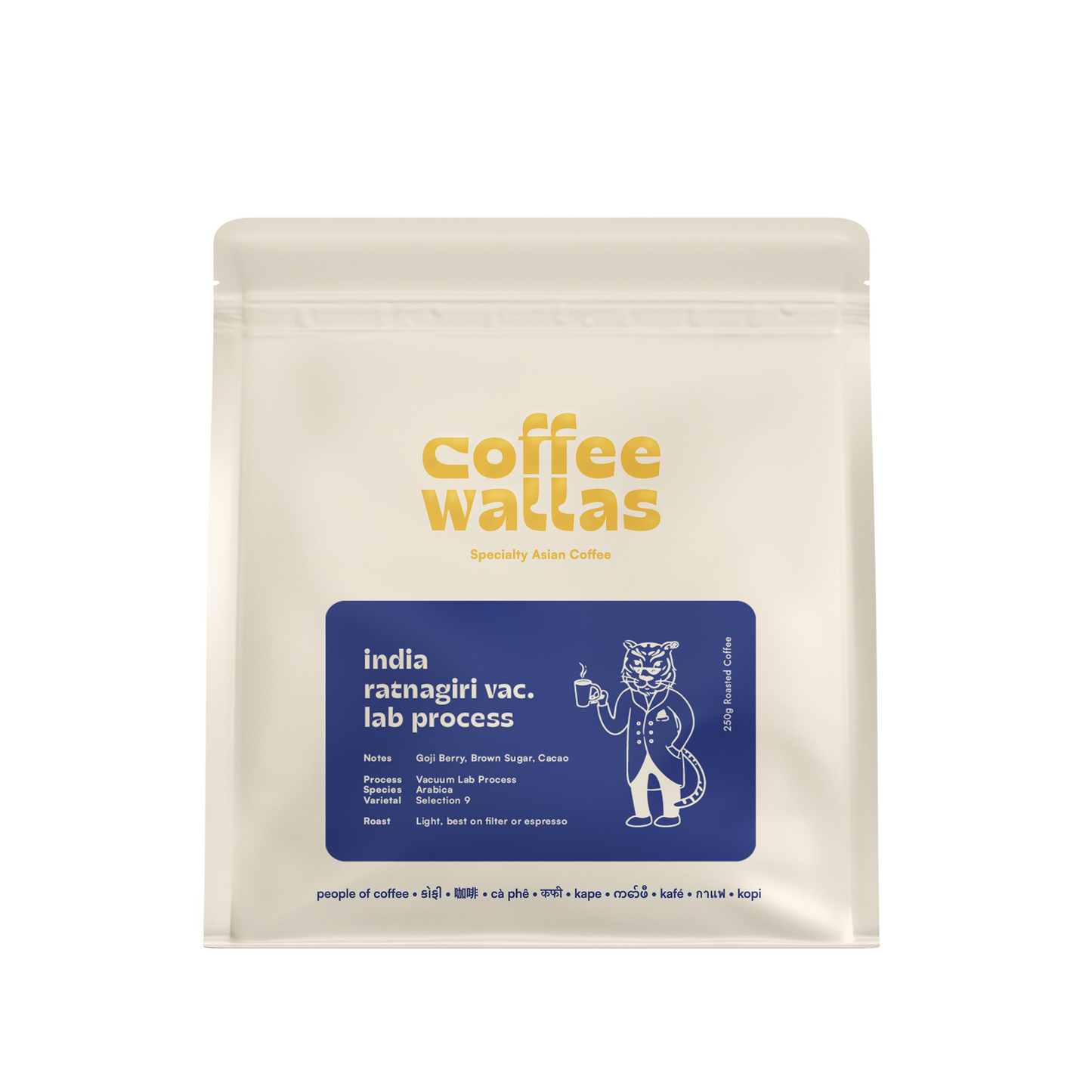
INDIA - Ratnagiri Vacuum Lab Process Washed

Dried Apricot | Sugarcane | Dark Cherry

Regular price $28.00
Regular price Sale price $28.00
Sale Sold out

This coffee is produced by Mr. Ashok Patre. Everyone in Indian coffee calls him Mr. Ashok. Not just Ashok. There's a level of respect that's put on his name because he's been banging the drum on Indian specialty coffee for the past 25+ years. He's a pioneer, and once you see how he processes coffee, you'll understand why.

The cherries go through a 42-hour anaerobic fermentation using terroir-specific microbes cultivated in his on-site lab. From there, the coffee enters a deep vacuum environment for 6 hours before being depulped and dried on raised beds for 19 days. He has a microbiologist on staff and has invested heavily in his fermentation facility (so much so that he gets push notifications to his phone about the Brix levels during fermentation). The varietal is SLN 9 (pronounced Selection 9), which is a mix of Ethiopian genetics and a Timor hybrid for resiliency.

The result? A cup that's rich and layered—goji berry sweetness, deep brown sugar, and a cacao finish that sticks around. There's a density to this coffee that feels intentional, like every step of the process was designed to build complexity without losing clarity.

Dustin and I visited Ratnagiri Estate near Chikmagalur in February 2025, and it was immediately clear that Mr. Ashok is operating at a level that most people outside India don't know about yet. We think he has one of the most advanced coffee processing facilities in India (maybe even the world).

250g bag. Roasted in Toronto, Ontario.

Orders placed by Sunday @ 11:59pm EST will be roasted Monday to Wednesday and shipped as soon as possible. Orders process and ship out within 2-5 business days.

Bag Size
View full details

ORIGIN DEEP DIVE

Indian coffee has a rich history dating back to the 17th century (yes, even earlier than Brazil or Colombia). Legend has it that Baba Budan, a Sufi saint, smuggled seven coffee seeds in his beard from Yemen to India. He planted them in the Chikmagalur hills of Karnataka, where the region Baba Budangiri now bears his name.

For much of its history, India has been known for commercial-grade Robusta and Arabica production. Monsooned Malabar was one of India’s most distinctive offerings, celebrated for its unique process that imparted earthy, mellow characteristics (which got a lot of love during the second wave of coffee).

Today, the specialty coffee scene in India is taking off (on both the production and consumption sides). A growing number of producers are experimenting with varietals, innovative processing methods, and sustainable farming practices to push the industry forward. Their coffees are elevating the archetypal Indian flavour profile while also introducing lots that diverge from it showcasing the country’s (largely overlooked) versatility.

What's exciting about this coffee

Where do we even start?

Mr. Ashok Patre is very focused on fermentation and processing, but his experiments are meticulous and scientific. His vacuum lab process — 42-hour anaerobic fermentation with cultivated terroir microbes, followed by 6 hours of deep vacuum, then depulped and dried on raised beds for 19 days — is the kind of processing you might expect from a competition lot in Colombia or Panama. But this is India, and the varietal is SLN 9, carrying Ethiopian genetics that give the cup a depth and fruitiness that's completely unexpected from this origin.

· the future · ભવિષ્ય · 未來 · tương lai · भविष्य · kinabukasan · အနာဂတ် · futuru · อนาคต · masa depan · the future · ભવિષ્ય · 未來 · tương lai · भविष्य · kinabukasan · အနာဂတ် · futuru · อนาคต · masa depan · the future · ભવિષ્ય · 未來 · tương lai · भविष्य · kinabukasan · အနာဂတ် · futuru · อนาคต · masa depan · the future · ભવિષ્ય · 未來 · tương lai · भविष्य · kinabukasan · အနာဂတ် · futuru · อนาคต · masa depan · the future · ભવિષ્ય · 未來 · tương lai · भविष्य · kinabukasan · အနာဂတ် · futuru · อนาคต · masa depan · the future · ભવિષ્ય · 未來 · tương lai · भविष्य · kinabukasan · အနာဂတ် · futuru · อนาคต · masa depan · the future · ભવિષ્ય · 未來 · tương lai · भविष्य · kinabukasan · အနာဂတ် · futuru · อนาคต · masa depan · the future · ભવિષ્ય · 未來 · tương lai · भविष्य · kinabukasan · အနာဂတ် · futuru · อนาคต · masa depan · the future · ભવિષ્ય · 未來 · tương lai · भविष्य · kinabukasan · အနာဂတ် · futuru · อนาคต · masa depan · the future · ભવિષ્ય · 未來 · tương lai · भविष्य · kinabukasan · အနာဂတ် · futuru · อนาคต · masa depan