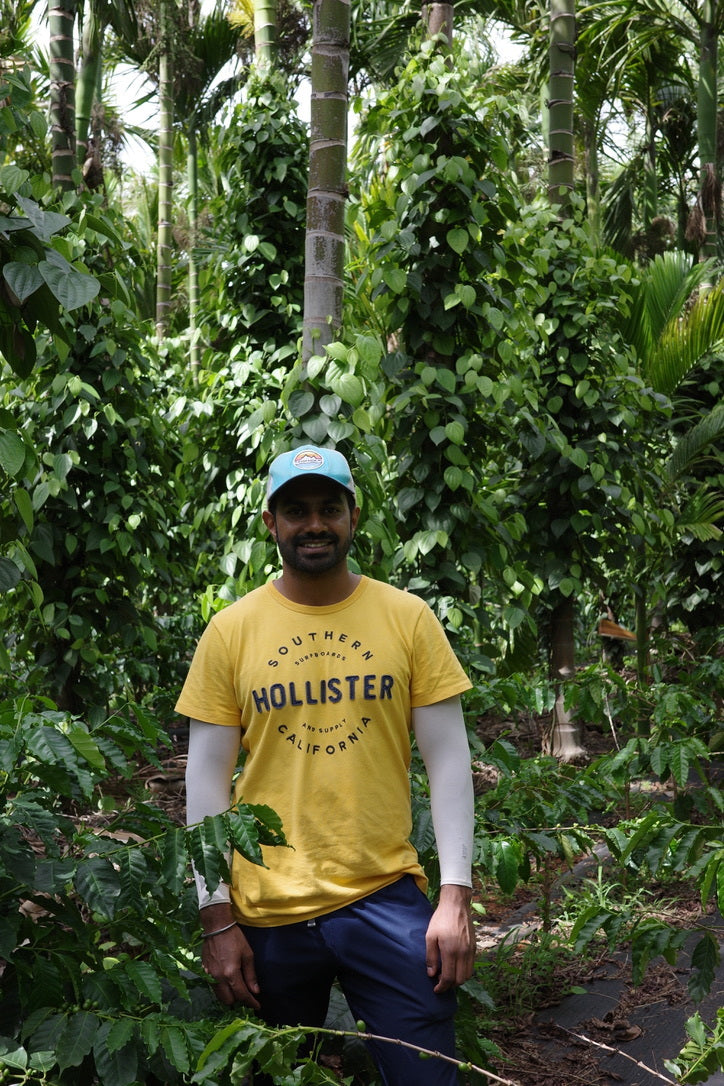
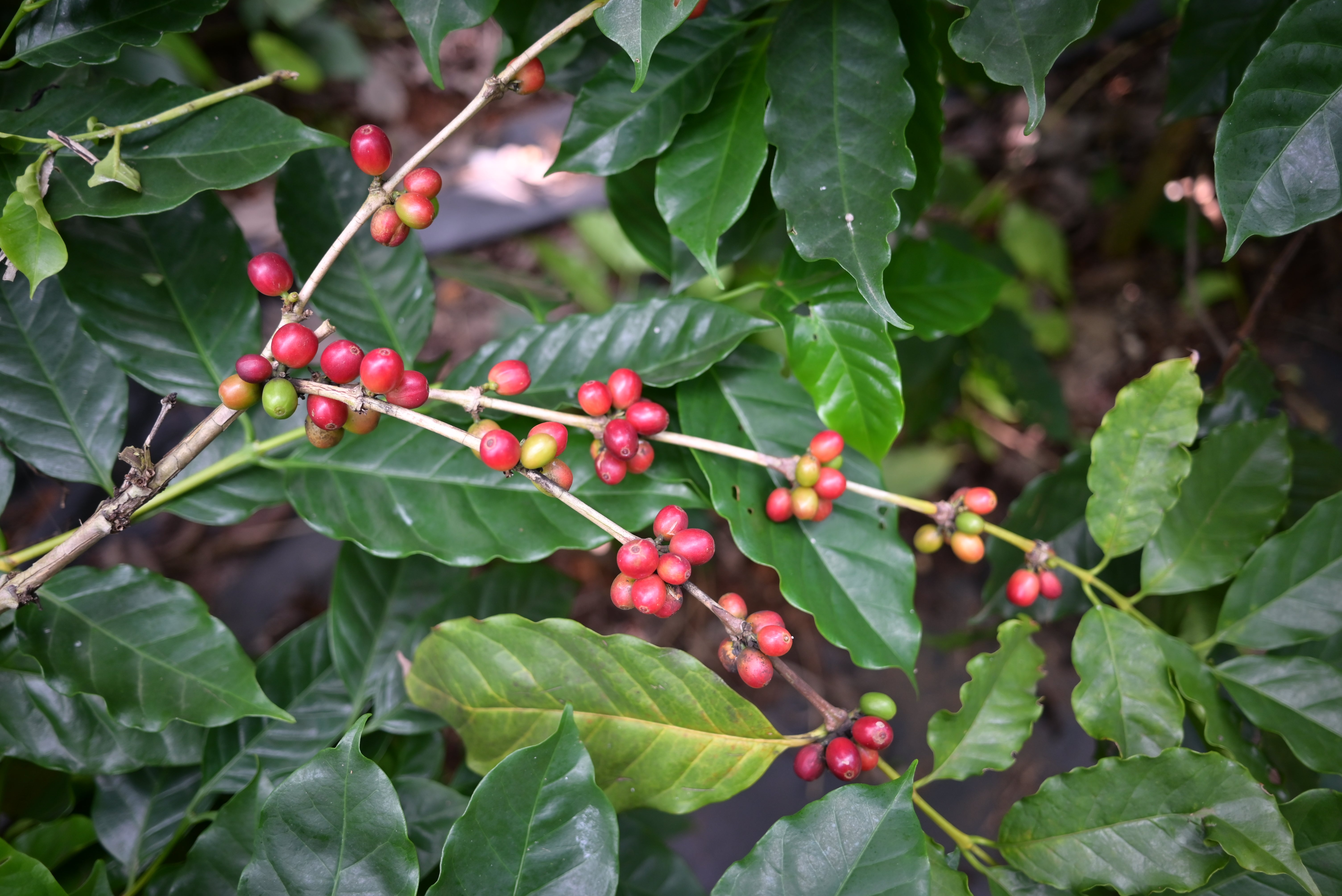
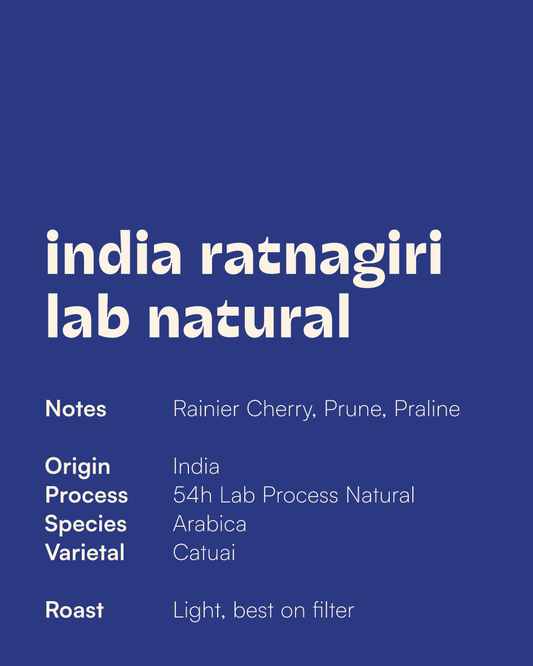
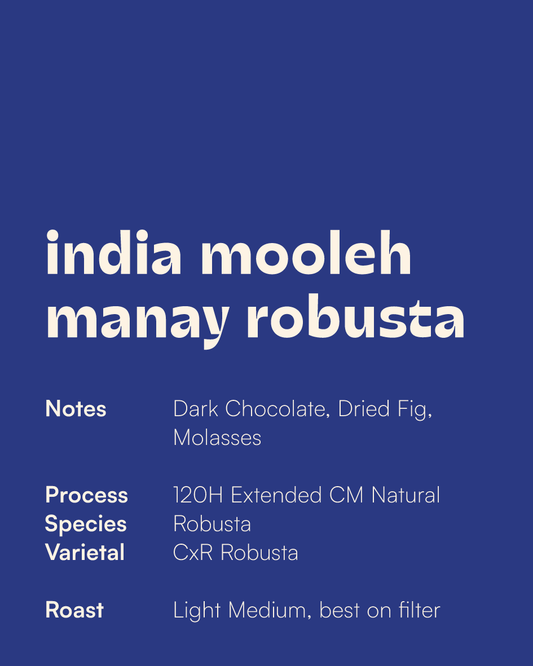
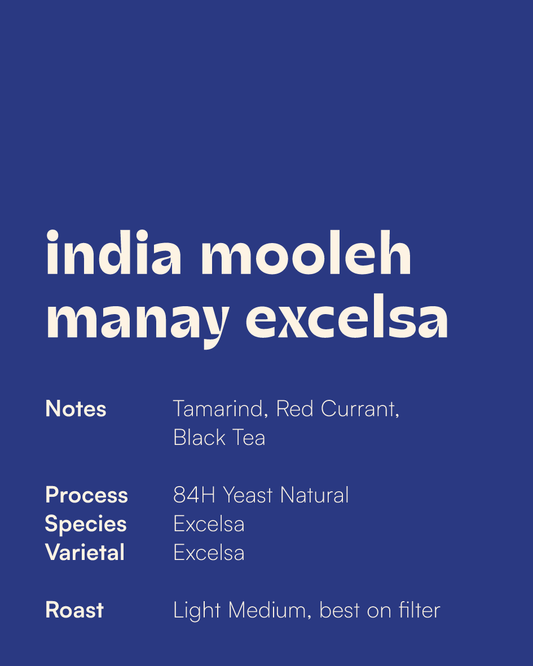
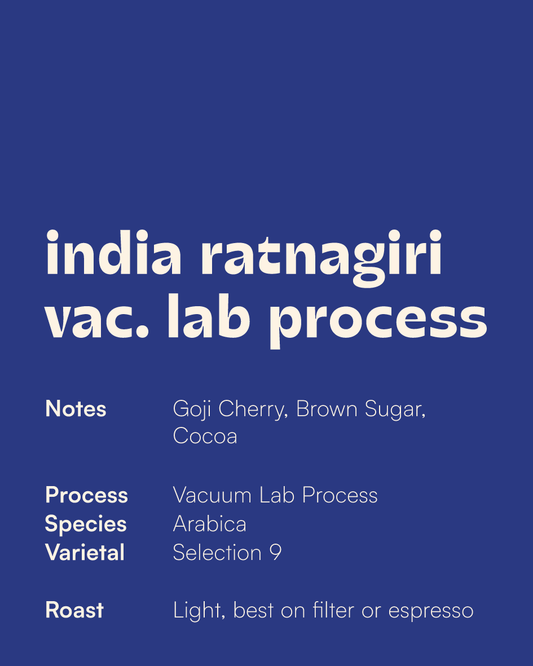
Gungegiri Estate sits in the lush Chandra-Drona (Baba Budangiri) hills of Chikmagalur, one of India’s most historic coffee-growing regions. Coffee has been cultivated here since the late 1800s, and today the 350-acre estate is managed by Hamsini and Shreeram Appadurai. Surrounded by native shade trees, flowing streams, and abundant wildlife, the farm produces coffees that reflect both the biodiversity and rich coffee heritage of the region.
This lot is an SLN 795 Arabica processed as a Lactobacillus and Pichia fermented natural. After careful hand-picking and sorting, the cherries undergo a 78-hour anaerobic fermentation, during which the cherries are inoculated with a selected microbial culture containing Lactobacillus and Pichia yeast strains. After fermentation, cherries are spread on raised beds to dry slowly for approximately 12-15 days. The result is a vibrant and layered cup with notes of Blackberry Jam, Starfruit, and Caramel.
We love this coffee on filter, where the juicy fruit character and bright acidity really shine. As espresso, it becomes richer and more syrupy, with jammy sweetness and a lingering caramel finish.
250g bag. Roasted in Toronto, Ontario.
Orders placed by Sunday @ 11:59pm EST will be roasted Monday to Wednesday and shipped as soon as possible. Orders process and ship out within 2-5 business days.
Indian coffee has a rich history dating back to the 17th century (yes, even earlier than Brazil or Colombia). Legend has it that Baba Budan, a Sufi saint, smuggled seven coffee seeds in his beard from Yemen to India. He planted them in the Chikmagalur hills of Karnataka, where the region Baba Budangiri now bears his name.
For much of its history, India has been known for commercial-grade Robusta and Arabica production. Monsooned Malabar was one of India’s most distinctive offerings, celebrated for its unique process that imparted earthy, mellow characteristics (which got a lot of love during the second wave of coffee).
Today, the specialty coffee scene in India is taking off (on both the production and consumption sides). A growing number of producers are experimenting with varietals, innovative processing methods, and sustainable farming practices to push the industry forward. Their coffees are elevating the archetypal Indian flavour profile while also introducing lots that diverge from it showcasing the country’s (largely overlooked) versatility.
What's exciting about this coffee
The Bisal Munti really stood out in terms of profile and good processing. After the cupping, it blew my mind to find that this coffee was grown at a pretty low altitude at 650 meters! On the table it had a lot of candied plum, chocolate, and salted caramel.